What is Agentic AI? A Guide for Modern Enterprises
Introduction
Artificial Intelligence is already part of many business systems today. Organizations use AI for data analysis, forecasting, customer support chatbots, and content generation. In recent years, tools such as ChatGPT have made AI easier for teams across different industries to use.
At the same time, AI is evolving beyond simple prompts and responses. A new concept called Agentic AI is gaining attention among technology leaders and enterprises.
Agentic AI refers to AI systems that can take actions and work toward a defined goal. Instead of waiting for instructions at every step, these systems can plan tasks, interact with different tools, and complete processes with limited human direction.
In this article, we will explore what Agentic AI means, how it differs from traditional AI systems, the capabilities that define agentic technologies, and how enterprises are beginning to use them in real business environments.
Understanding Agentic AI
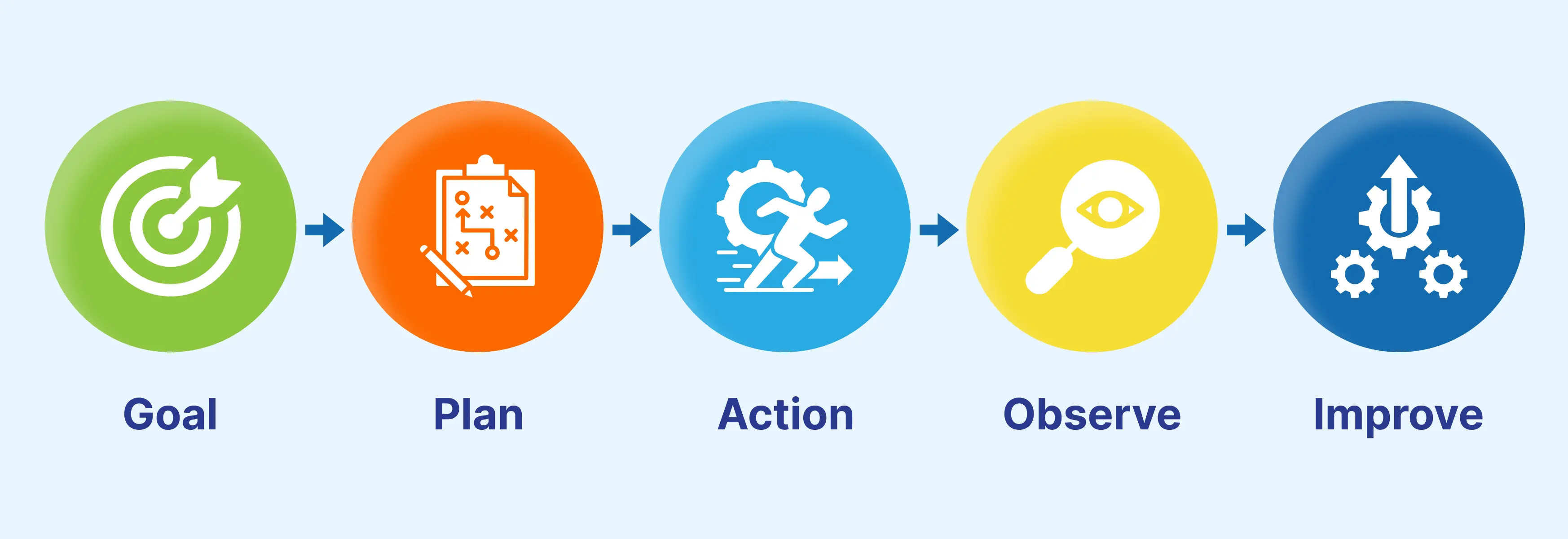
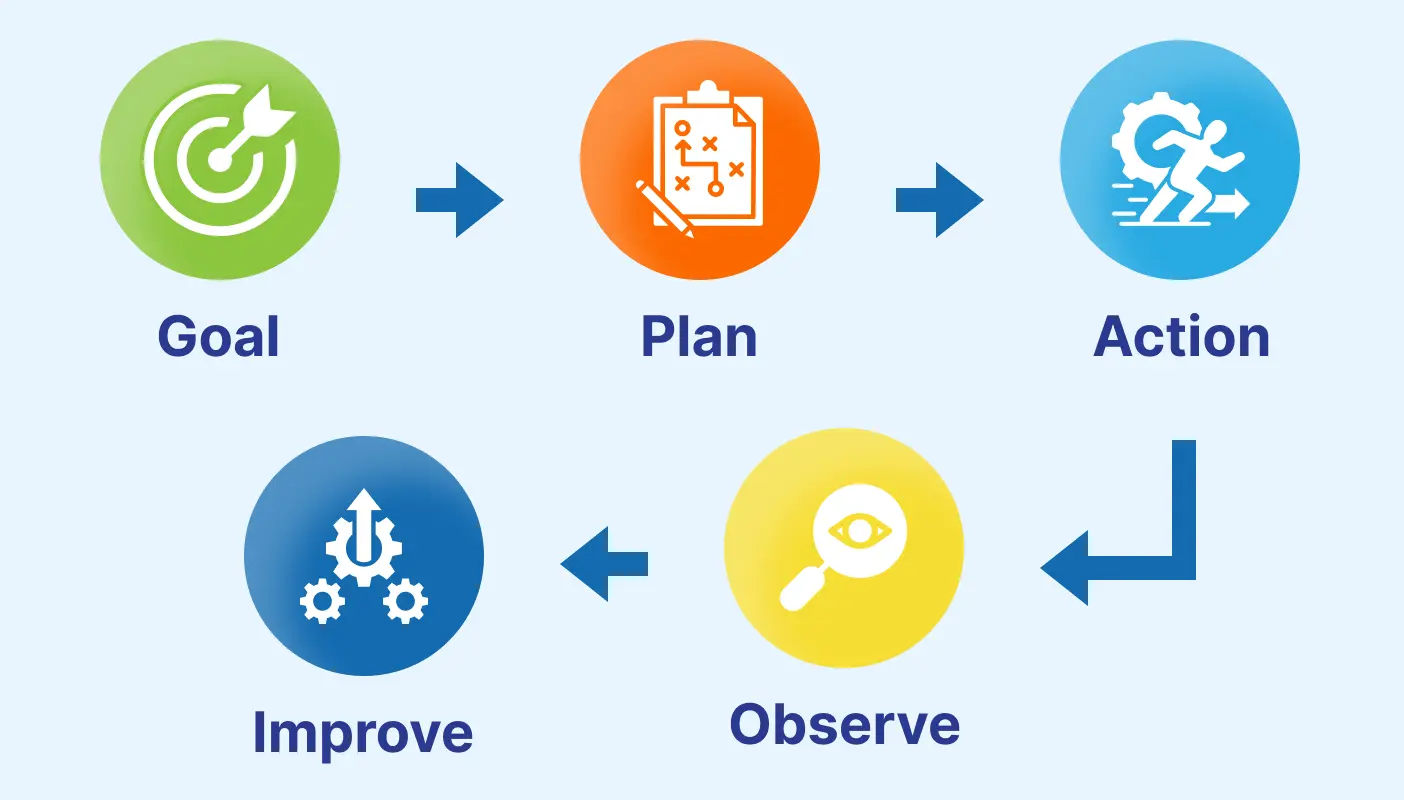
Agentic AI describes artificial intelligence systems that are designed to operate with a certain level of autonomy. Instead of focusing on a single task, these systems work toward achieving a goal and determine the steps required to reach that outcome.
Traditional AI systems generally respond to a specific input. A user asks a question or provides instructions, and the AI produces an answer or output. Agentic AI expands this concept by allowing AI to take several connected actions that move a process forward.
For example, consider a weekly sales reporting process. In a traditional setup, employees might collect data from multiple systems, prepare the report, and share it with the leadership team. An agentic AI system could automate most of this workflow. It could gather the required data from different tools, analyze sales trends, generate a report, and send the results to managers.
This ability to plan actions and interact with multiple systems makes agentic AI particularly interesting for enterprises that rely on many digital platforms.
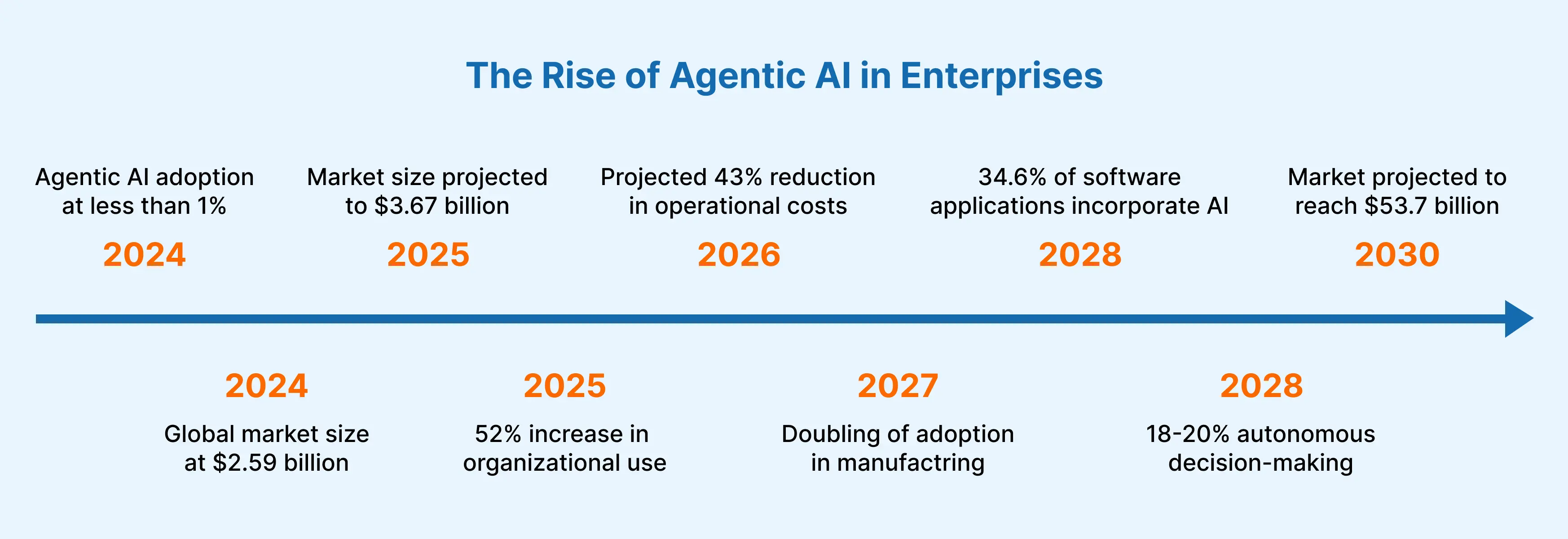
Research also suggests that over one third of enterprise software applications may include agentic capabilities by 2028, highlighting the growing importance of this technology.
How Agentic AI is different from Traditional AI
Traditional AI systems have delivered strong value for businesses. They help with predictions, automation, and analytics. However, most traditional systems are built to perform specific tasks rather than complete end to end workflows.
Agentic AI changes the focus from task execution to goal completion.
Below is a comparison that highlights the difference.
| Traditional AI | Agentic AI |
|---|---|
| Responds to prompts | Works toward a defined goal |
| Handles individual tasks | Manages multi step workflows |
| Requires frequent human instructions | Operates with limited supervision |
| Generates information | Can take actions in systems |
| Often isolated within one tool | Interacts with multiple platforms |
In practical terms, this means agentic AI can act more like a digital assistant capable of carrying out processes, rather than a tool that only provides answers.
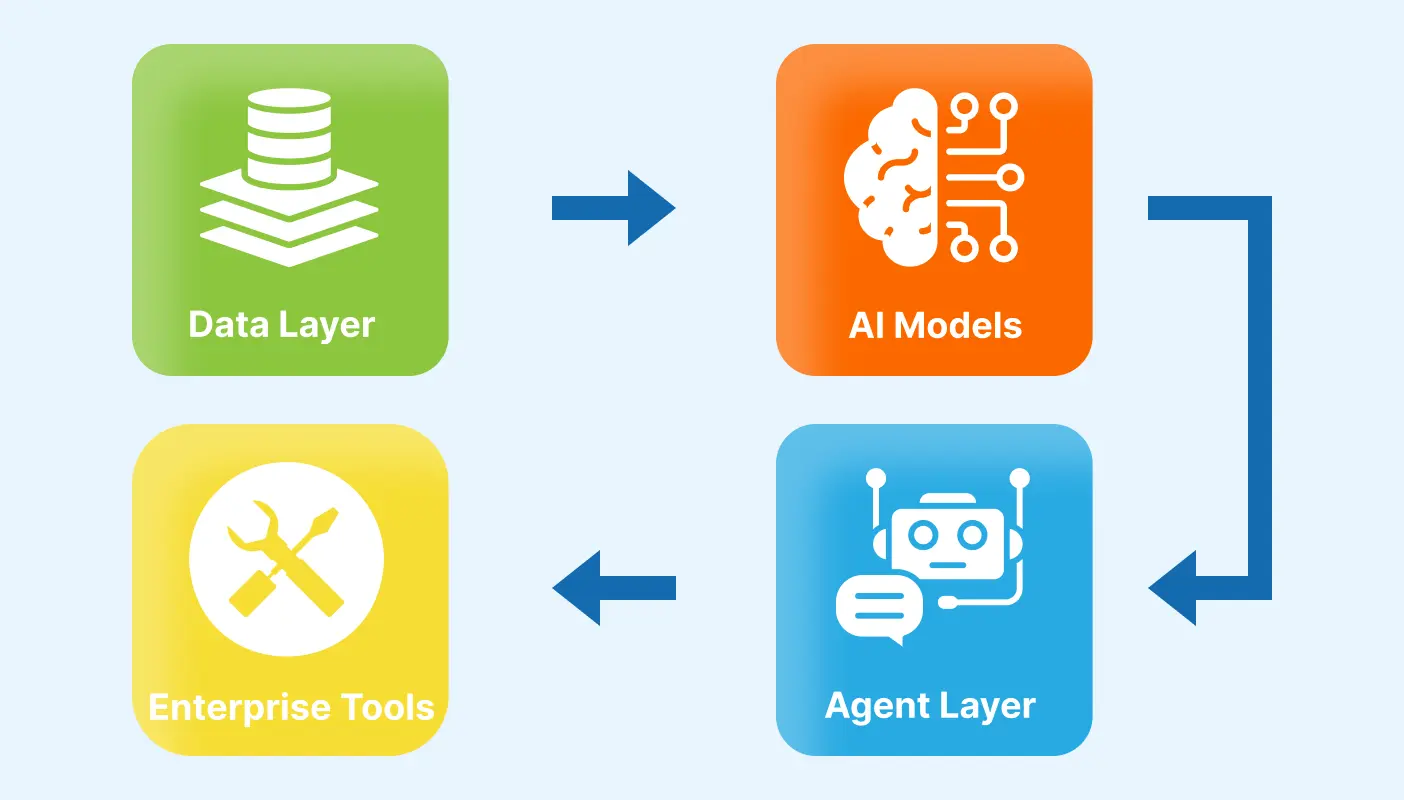
Key Capabilities of Agentic AI
Enterprise Use Cases of Agentic AI
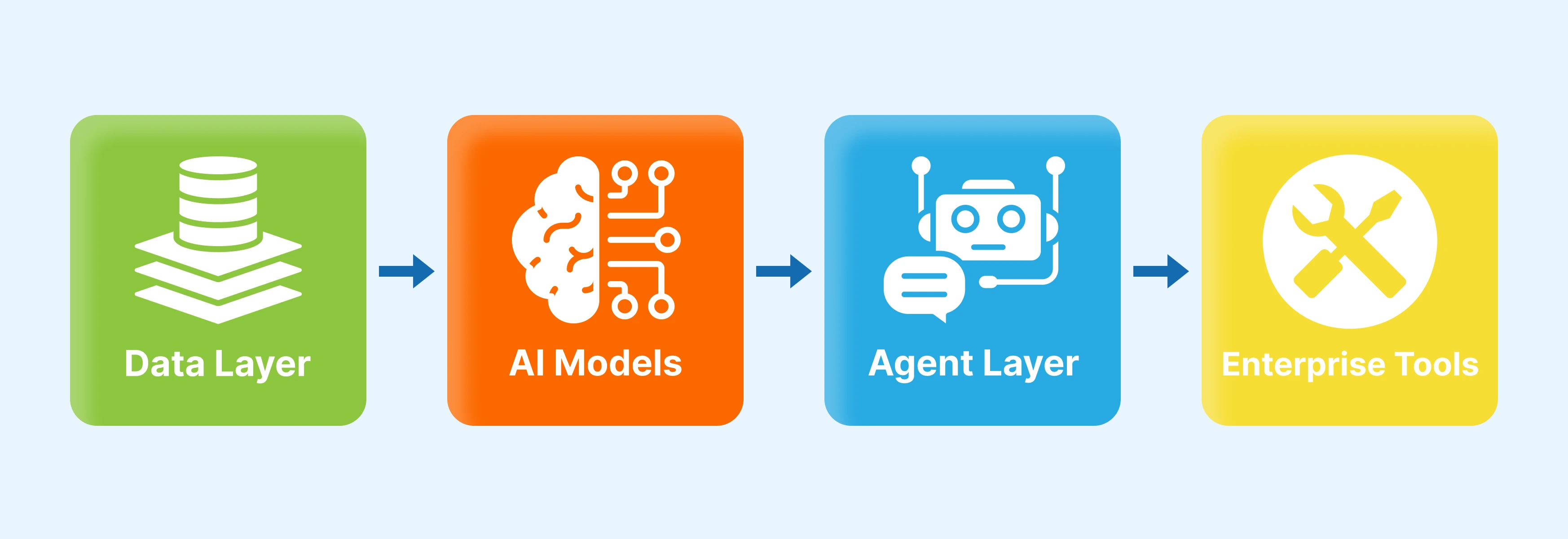
Enterprises are beginning to explore how agentic AI can support different departments and workflows. Because these systems can interact with multiple tools, they are particularly useful in environments where processes involve several stages.
One common area of experimentation is sales and customer relationship management. AI agents can monitor incoming leads, gather background information about potential customers, and suggest next steps for sales teams. In some cases, they can also draft follow up emails, update CRM records, and schedule meetings automatically.
Another important application is customer support. Many organizations receive large volumes of service requests that follow similar patterns. Agentic AI systems can review customer information, suggest solutions, and escalate complex issues when human intervention is required. This allows support teams to focus on more complicated cases.
Operations teams can also benefit from agentic AI. Businesses often track data from multiple systems related to supply chains, inventory, or production performance. AI agents can monitor these data streams continuously and alert managers when unusual patterns appear.
According to recent industry research, 29% of organizations already use some form of agentic AI, and about 44% are planning to adopt it soon.
Marketing departments are exploring agentic AI as well. AI agents can analyze campaign performance, identify patterns in customer behavior, and prepare reports that help teams understand which strategies are working best.
Benefits of Agentic AI for Businesses
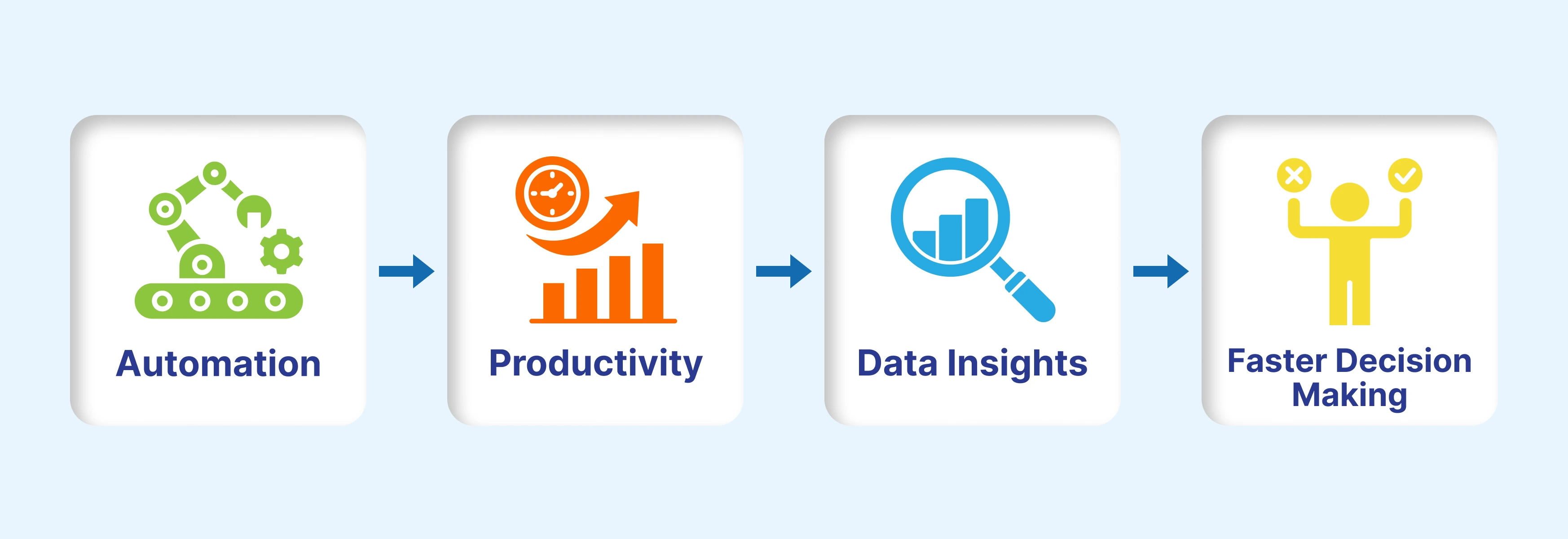
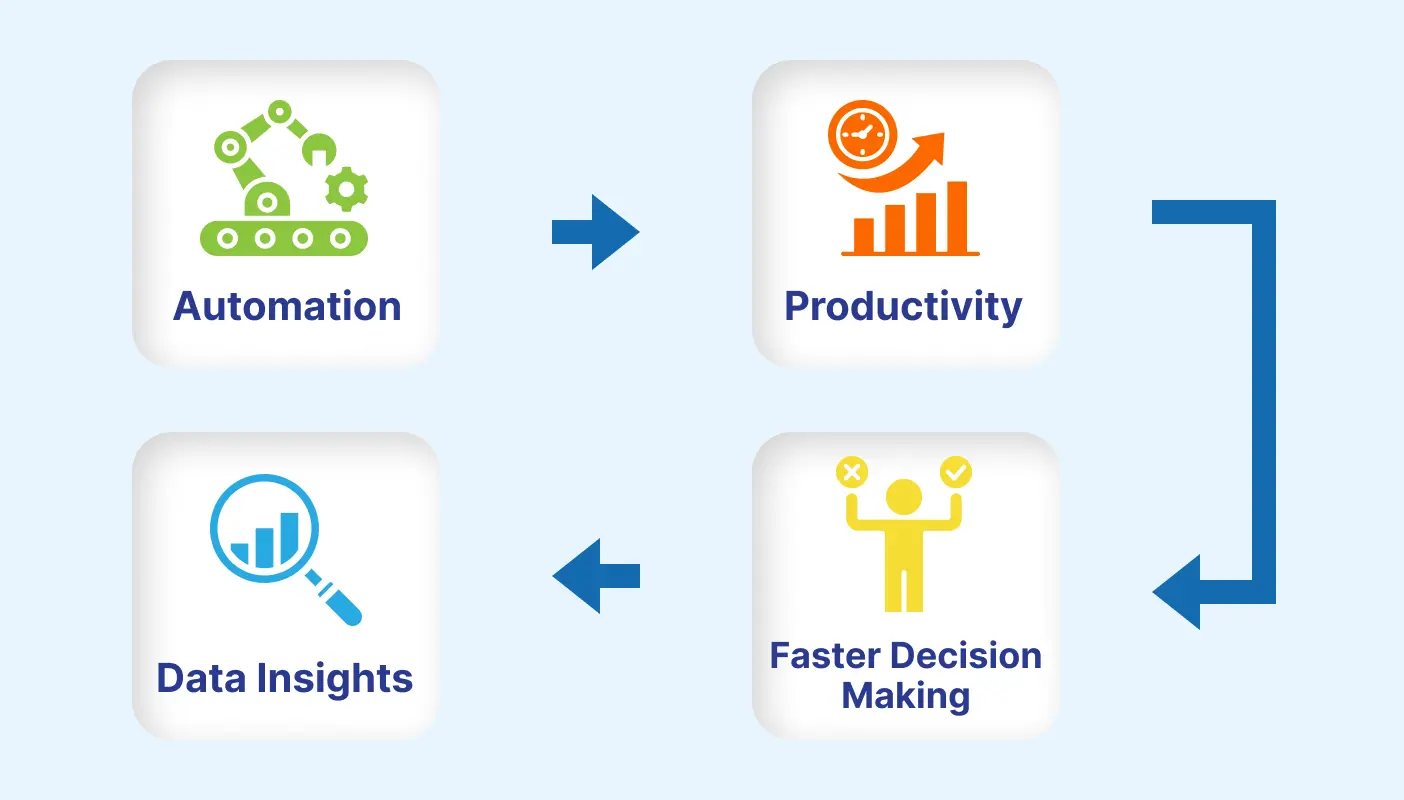
Enterprises are interested in agentic AI because it can help organizations operate more effectively in complex digital environments. Many modern businesses rely on dozens of software tools, and managing workflows across these systems can require significant manual effort.
Agentic AI helps connect these systems and use data more effectively. By analyzing information from multiple sources, AI agents can generate insights that might otherwise require time consuming analysis.
Another major benefit is the reduction of repetitive manual tasks. Activities such as preparing reports, updating records, or checking system data can often be automated by AI agents. This allows employees to focus on strategic or creative work.
Agentic AI can also improve responsiveness. Because AI systems can monitor business conditions continuously, they can detect changes or problems more quickly than traditional manual processes.
Challenges and Considerations
Although agentic AI offers promising opportunities, enterprises must approach implementation carefully. Introducing autonomous systems into business workflows can create technical and organizational challenges.
One important factor is data quality. AI systems depend heavily on reliable data. If enterprise data is incomplete or inconsistent, the insights produced by AI agents may not be accurate.
Another key consideration is governance. Organizations must define clear policies about what actions AI agents are allowed to perform. Some activities may require human approval to ensure that important decisions remain under human control.
Security is also a major concern. Because AI agents interact with several enterprise systems, they must operate within secure environments. Access permissions, monitoring tools, and audit logs are important for ensuring that AI actions remain transparent and controlled.
Finally, organizations must manage the human side of adoption. Employees need training and guidance, so they understand how AI systems support their work rather than replace it.
The Future of Agentic AI in Enterprises
Agentic AI is still at an early stage, but its role in enterprise technology is expected to grow significantly in the coming years. Many software vendors are already developing platforms that include AI agents capable of interacting with business applications.
One emerging trend is the development of multi agent systems, where several specialized AI agents collaborate to complete complex workflows. For example, one agent may focus on data analysis while another manages communication tasks or monitors operational performance.
As enterprises continue investing in data infrastructure and AI platforms, these systems may become a standard part of enterprise software. AI agents could eventually assist employees with routine processes, monitor business conditions, and generate insights automatically.
Organizations that begin exploring this technology today can gain valuable experience and identify the areas where agentic AI provides the most practical value.
Conclusion
Related Post



-
F
-
A
-
Q
Agentic AI refers to artificial intelligence systems that can work toward a goal and take actions to complete tasks. Instead of responding to a single prompt, these systems can plan steps, interact with tools, and execute processes.
Generative AI focuses on producing content such as text, images, or code. Agentic AI focuses on completing tasks and achieving objectives by interacting with systems and performing actions.
AI agents are software programs powered by artificial intelligence that can perform tasks on behalf of users. They can gather information, analyze data, and interact with digital tools to achieve specific goals.
Agentic AI can support many business functions including sales, marketing, customer support, supply chain management, and IT operations.
Most enterprise AI systems are not fully autonomous. Organizations typically set rules that define which actions AI agents can perform and which actions require human approval.
Enterprises see agentic AI as a way to automate complex workflows, connect multiple systems, and improve productivity while helping teams make better decisions.
Many organizations begin with small pilot projects such as automating reporting tasks, support workflows, or data analysis processes. These experiments help teams understand how AI agents perform in real environments.
Want to Scale
Your Business? Let’s Meet & Discuss!

CANADA
30 Eglinton Ave W Mississauga, Ontario L5R 3E7
Get a Quote Now
Let's delve into a thorough understanding of your challenges and explore potential solutions together